





7 Must-Have Hand Tools That Will Make Your Job Easier
Machining has transformed over the years; this is not new information. Although most of today’s machine shops have automated processes there are still a number of operations that require the manual skills of a machinist (especially in the setup and finishing phases).
For all those machinists who like to put their hands into work, we put together a special list of hand tools that will make your life easier and your work more enjoyable. We asked the Practical Machinist community what their “must-have” hand tools are. With more than 300 responses across social media, there was a general consensus about which tools are non-negotiables such as micrometers, height gages, combination squares, and indicators.
Beyond the obvious tools in the machinist line-up, here are some other must-have hand tools that should be in your toolbox, with recommendations for reasonably priced models.
Recommended hand tool models
Pocket Scale
Great for stirring coffee! Jokes aside, if accuracy and quality control matter to you, you’ll want one (or three) of these kept on hand! Both 6” and 12” rules come in handy in the shop, though 6” rules were mentioned more by the Practical Machinist community on social media.
Starrett C316R-6 6-Inch Steel Rule with Inch Graduations
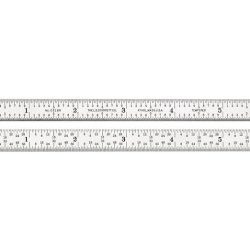
Starrett Full Flexible Steel Rule

Mitutoyo 182-105, Steel Rule, 6″
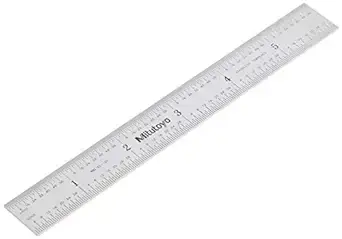
Mitutoyo 182-105, Steel Rule

Dead Blow Hammer
A hammer designed to dispel all of the energy into the object being struck. The dead blow is generally used for objects which need a little more force in order to move.
Pit Bull CHIHD190 2 lb Neon Dead Blow Hammer
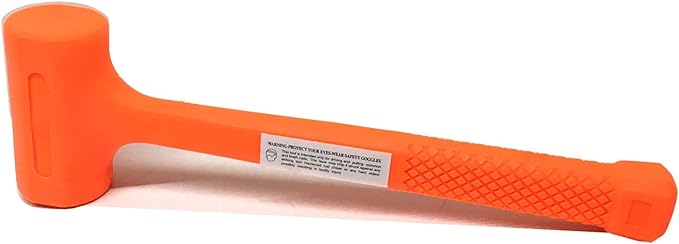
Pit Bull CHIHD190 2 lb Neon Dead Blow Hammer
3-Piece Premium Dead Blow Hammer and Unicast Mallet Set
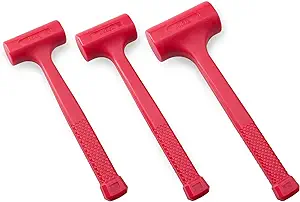
3-Piece Premium Dead Blow Hammer and Unicast Mallet Set
Deburrer
A fundamental tool to have, especially when dealing with holes on mild steel or aluminum. A deburring tool removes burrs from around the edge of a hole or entrance in a workpiece and creates a chamfered edge.
NOGA SP7700 7 Pc. Complete Deburring Tool Set in Plastic Case
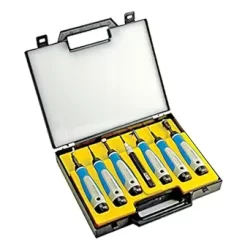
Noga SP7700 | 7 Pc.
AFA Tooling Deburring Tool with Blade and 10 Extra Blades
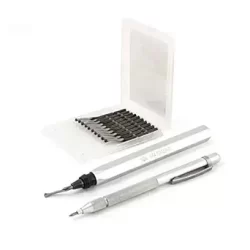
AFA Tooling – Deburring Tool with 11 High Speed Steel Swivel Blades and Tungsten Carbide Scribe
Calipers
One of the first tools that machinists mention when asked to name the most important tool in their toolbox is a caliper. Since one type is not unanimously considered better than the others, the selection is generally based on personal preference. If you don’t know where to start, you can check out our guide Top 5 Digital Calipers for Machinists to find out the pros and cons of each model.
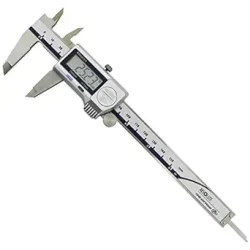
Mitutoyo 500-752-20
File
Understanding the different characteristics of files and how different shapes and cuts can help achieve the desired results is crucial when it comes to file selection. If you have yet to decide which file you need, check out our article Tips to Select and Maintain Your Files.
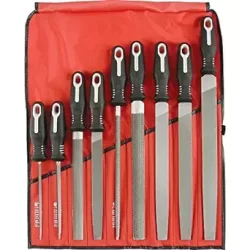
Crescent Nicholson 9 Pc.
Pocket Knife
Maybe you’re a knife maker…so disregard the below and definitely leave a comment with a link to your work! Keeping a pocket knife on you at all times is a no brainer. They are so versatile. Tell us in the comments what you use a pocket knife for in the shop.
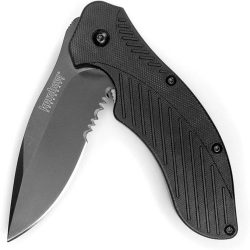
Kershaw Clash Black Serrated Pocketknife
Old Timer 8OTB Genuine Bone Senior 6.9in S.S. Traditional Folding Knife

Old Timer 8OTB Genuine Bone Senior Traditional Folding Pocket Knife with High Carbon Stainless Steel
Pliers
There are many types of pliers…needle nose, slip joint, or side cutters, so depending on the applications you work on in the shop, the plier type will vary. But Knipex is hands down the most popular plier brand among the Practical Machinist community.
Knipex 87 01 180 7-1/4-Inch Cobra Pliers
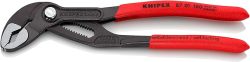
KNIPEX
KNIPEX Tools 00 20 06 US2, Pliers Wrench 3-Piece Set
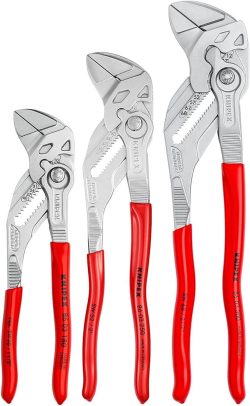
KNIPEX Tools 00 20 06 US2
Bonus: flashlight
It’s common for some machinists to keep a flashlight on hand. Having an LED light that is small makes checking those dark and hidden places all that much easier.
Nite Ize Inova X1 LED Flashlight
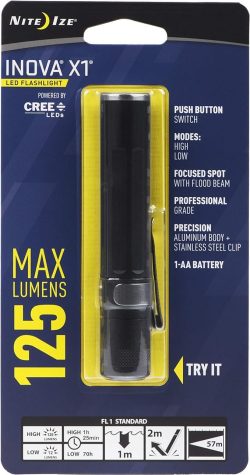
Nite Ize Inova X1 LED Flashlight
This post may contain affiliate links. Please read our disclosure for more info.

23 Comments
In my day, a deburring tool was called a file !
Good luck with your file on plastic!!!
I agree, as I work work on Glock frames nearly every day, but files can be very handy as a backing for “Wet-or-Dry” auto body paper. Wrap a strip around the file and wet it very slightly with light oil or kerosine. “Chase the burr” which is the tiny flap of material left on the edge where you are filing by turning the workpiece around and reversing the direction of the cut. Polish with pumice powder paste with mineral spirits. Get a pack of 1500 grit and another pack of 2000 grit. If you use a belt sander to rough it out, guard against heating. This will ruin the part. To get cut lines out, change the cutting direction at intervals. Go very slowly and check frequently. Back the paper with shapes/blocks/ flats if you need an accurate surface.
Alot if tools left out, debut stuff great if your company will buy refill blades. If not. Heck with that. Everyone has a favorite brand so promoting one brand over another is opinion aside from obvious bad brands. Having your own tools is good and bad. So many newcomers dont have their own stuff so borrowing is an issue. But not running to the tool crib or inspection is a time saver.
What about files and dial calipers to 0.01 mm
A machinist square and 1-2-3 blocks, then an edge finder and some parallels.
Agree 100%. Check some of the machine tool catalogues and stock up on some various sizes of high-speed steel lathe tool blanks. Most are Blanchard ground and I’ve found they are usually very accurately made, nearly as accurate as my $$$$ priced Browne & Sharpe 1X2x12 and 1X1x12 precision ground parallels. I use them nearly daily as true surfaces on filing jigs, measuring jig bases, etc. A piece of quartz or granite kitchen countertop material will be accurate (usually) as a surface plate and can sometimes be had for the asking. Check it with a parallel and a 001” feeler gauge. I have a 20”x15” one I’ve used for years. Another tool you will eventually need is a PRECISION machinist’s level. It will cost at least $100.00, but it is worth it’s weight in gold. Starrett makes the ones the rest are compared to. Do not buy these from (E..Y). Some have been broken or have lived a rough life and are no longer dependable.
I still prefer old world machining on my step pulley J-Head. Yeah it’s old like me… well not As Old as me. Some table keys and dowel pins, good mill vise (I don’t care what brand as long as I can square it up good, and it locks down square), parallels and of course a Babbitt and brass hammer. But when I bought my machine after retirement, I spent a rediculous amount on all the trimmings I did’t personally own. As a matter of fact, my first few jobs didn’t have “the trimmings” back then. But seriously, an end mill sharpener really saves a lot of money.
Where are these articles coming from? A hammer doesn’t make a job easier unless you’ve been tapping parts down into vises with your bare hands. If your shop doesn’t have these tools at least somewhere, I gotta wonder how you function.
What about a Haimer positioning indicator? It might endorse a specific company, but hey, it’s definitely something I didn’t know about when I started that would have made my job easier.
Something simpler; how bout an electric drill? Sounds silly, but not everyone thinks about putting a chamfer tool into an electric drill to save time and joints from hand-deburring the backsides of holes.
If you don’t have a tap handle in your tool box, you probably don’t tap holes. You can’t fix everything with CNC, and odds are if you’re tapping in a bridgeport, you own a tap wrench. But what about a Lassy hand tapper and tap guide? Different companies make them, but it’s indispensable for tool room work. I dare say if I had one when I was a kid I would have saved a lot of my dad’s taps from an early demise.
I bet most of us have worked for companies that thought a bone, a rock, and a piece of string are all the tools you need. The worst companies that’s about all they provided!
Employees motto:
We the unwilling led by the incompetent have done so much with so little for so long now we can do anything with nothing.
After reading some of these replies. It nice to see there are still ( old school ) guys out there that can still ,hands on
can take on any task given and produce results. Ex. Can you fix this , can you get this out , or can you make me another. Bring it on ! That’s how we make a living and gain a reputation. My motto;
It ain’t broken till I say it is !
I don’t get it…if you have a hammer, why do you need the other tools? 😉
And they don’t have microprocessors!
One could also say, “If you have all those other tools, what do you need a hammer for?”
The article was titled 7 must have hand tools that make your job easier. Not THE 7 Must haves….
I think it’s a poor list. Anyone with a month on the job could have created a better list. Such as:
Scale
Calipers
Micrometer
Edge finder
Parallels
Surface Gauge
Dial test indicator
A 6″ pocket scale graduated in 64ths & 32nds on one side and 10ths & 100ths on the other is indespencble along with the above mentioned scribe and a permanent marker in my shop apron. Keep them in a now harder to come by “pocket protector”. Never went out on the shop floor without them.
In my day we used tally ho cigarette paper to edge find and a sticky pin, (plasticine and a nail) to find centres
I worked in a Tool Room that had that posted on the wall. It was followed by: “That was the Business Model of our former competitor. We bought them at the Bankruptcy Auction. If you need it, tell the boss.”
Hacksaw
Center punch
Paint marker
Screw driver
Scriber
Center punch
Scriber
Hacksaw
Paint marker
Prussian blue
1meter rule
Divider
Compass
Inside/ outside calipers
Manifying glass
Square
Crank Yanker. Time saver, shoulder saver.
That’s a pretty sad set of recommendations for knives, from a machinist publication! How about something from Benchmade or Spyderco, or even Buck. And many others. Knife makers are at the forefront of tool making metallurgy, IMHO. See https://knifesteelnerds.com/
Exactly what I was going to say: https://knifesteelnerds.com/2021/10/19/knife-steels-rated-by-a-metallurgist-toughness-edge-retention-and-corrosion-resistance/ or Cedric and Ada. https://www.youtube.com/watch?v=6nq1_9Af2sE
For pliers, I would prefer a long-jaw vise grip (LC 12) than a set pf Knipex, the latter cannot do a ‘lock-up’ grip