




Archaeological Artifacts preserved by 3D Scanners UK for The Blue Futures Exhibition
The Blue Futures Exhibition
The Blue Futures exhibition which explores our relationship with water and the coast was curated by Suzy O’Hara and supported by South Tyneside Council and SeaScapes, funded by the National Heritage Lottery Fund. Inspired by challenges around climate change and the natural environment, the exhibition brings together three projects which explore the rich variety of life and activity connected to our rivers and ocean.
The projects BE THE SEA, Renewable Blue, and Sound Dig, have been created by artists, who have used creative workshops and discussions to develop the ideas and artworks for the exhibition with local communities. Each project raises questions about our human impact on the environment and how we can create a greener future by understanding and caring for our blue heritage.
3D Scanners UK Involvement
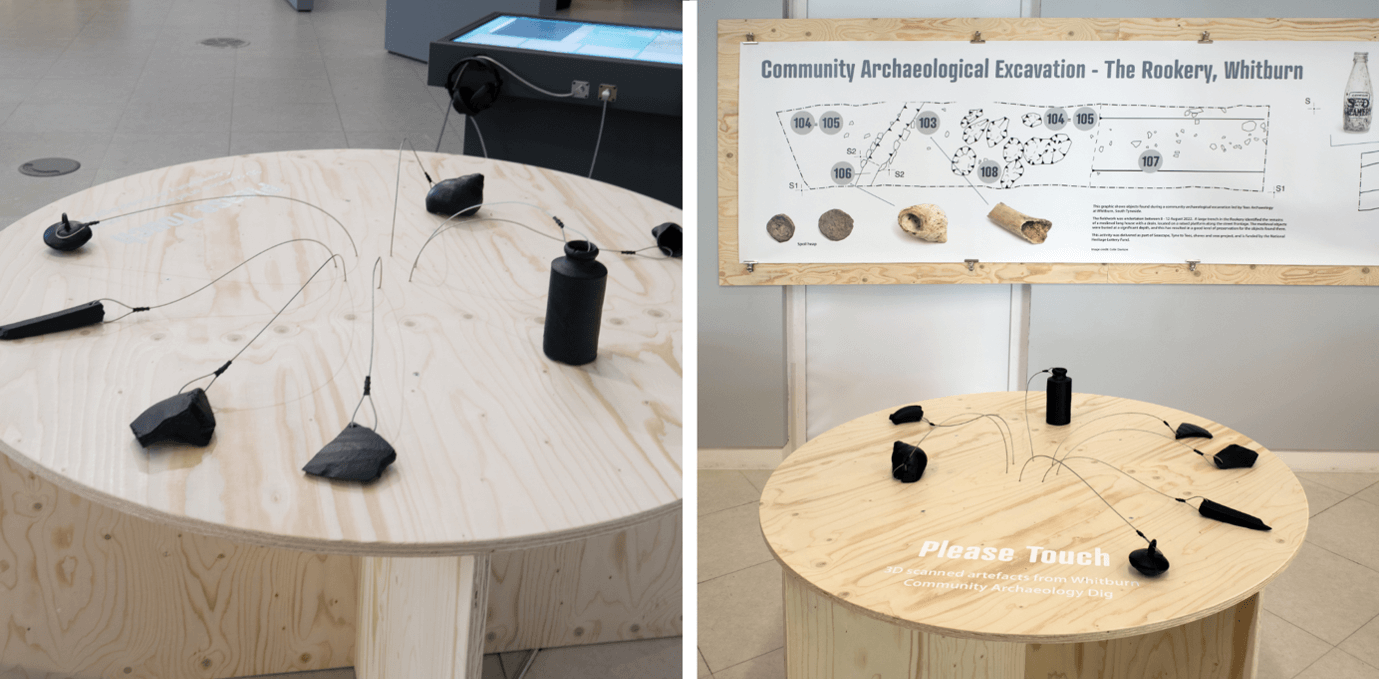
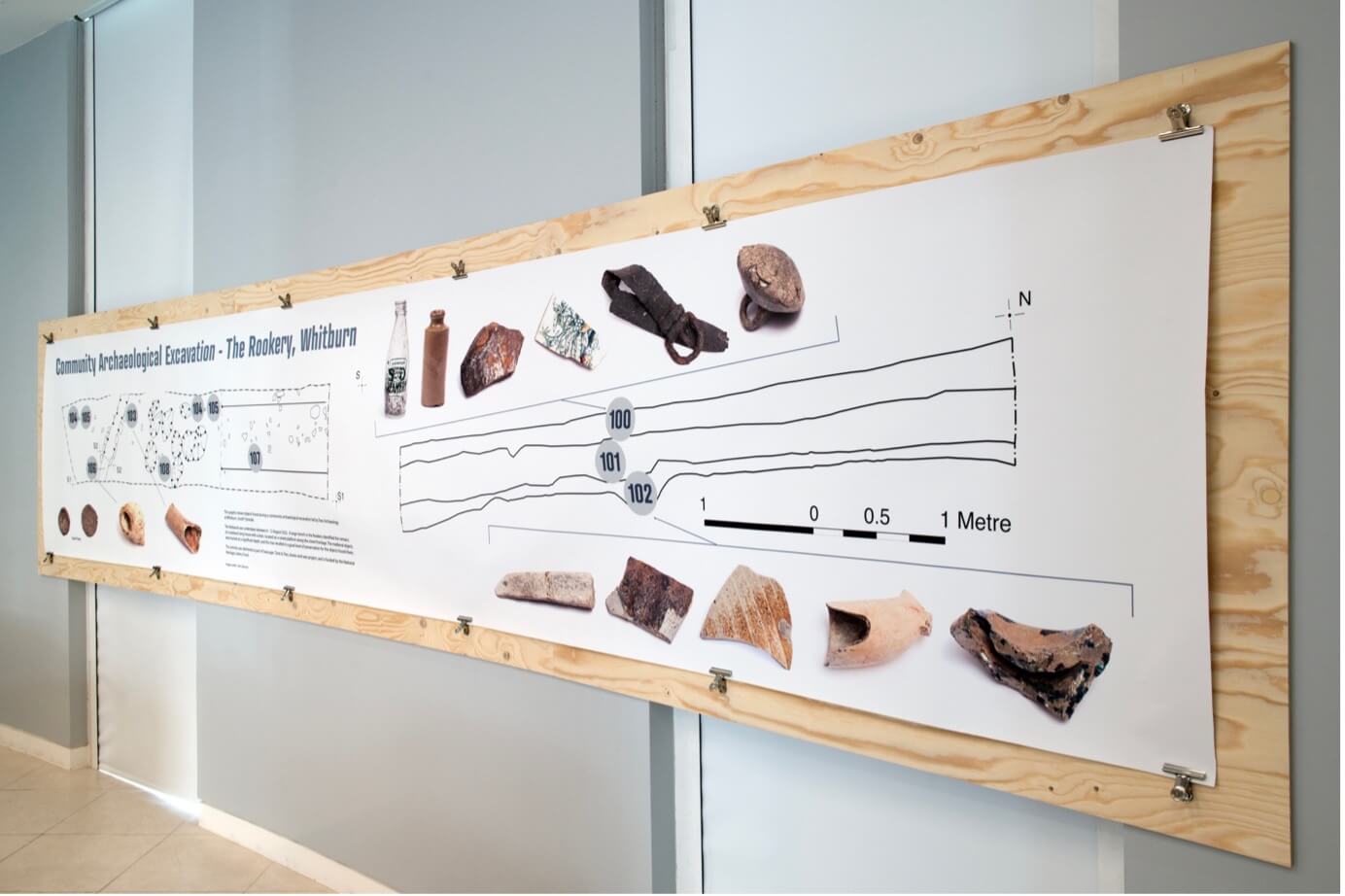
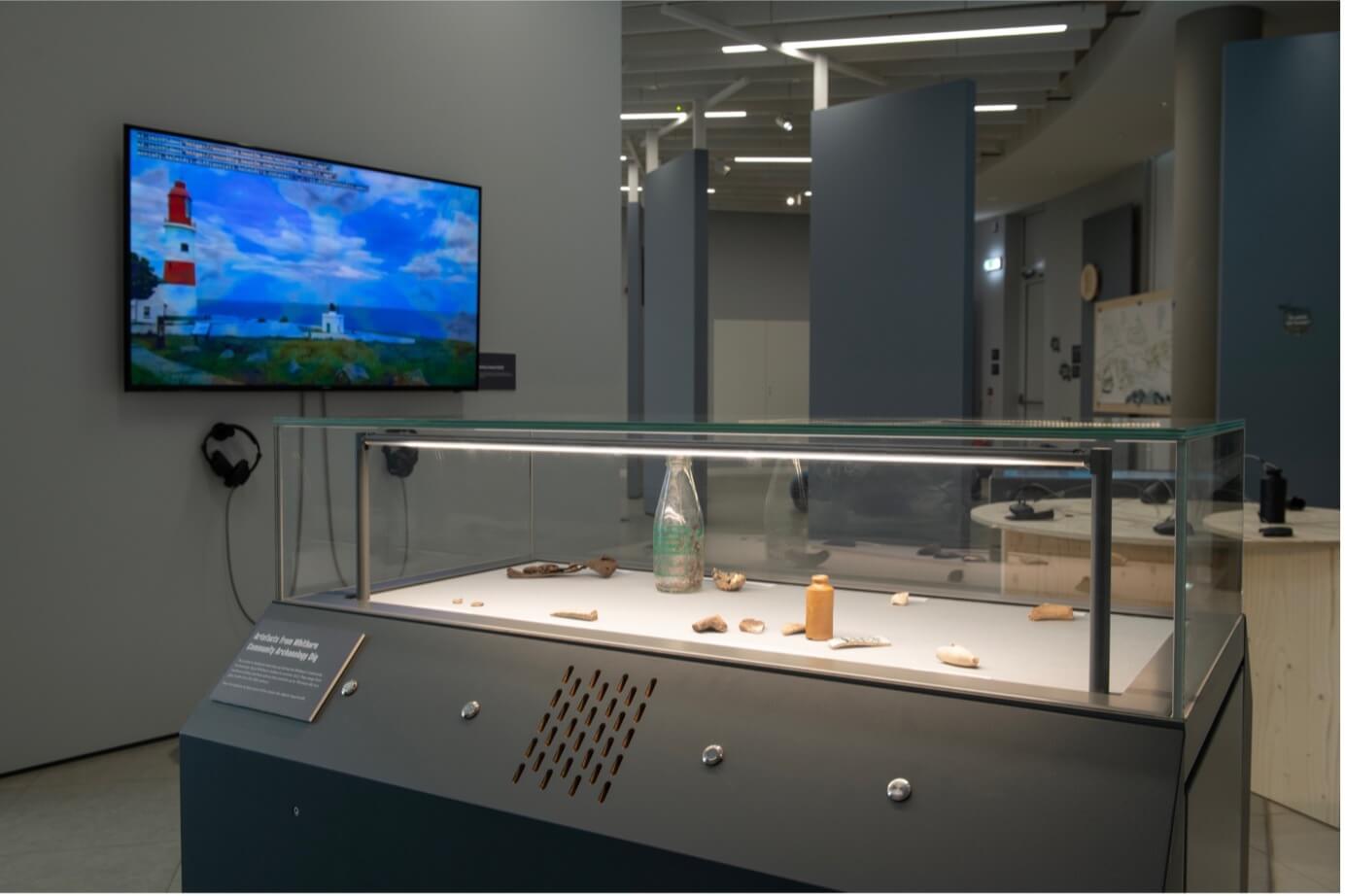
3D Scanners UK played a pivotal role in the bringing the Sound Dig section (lead by artist Shelly Knotts and Professor Caroline Mitchell) to life by lending their expertise in precision scanning and 3D replication to enhance the visitor experience. The objective was to produce replicas of the artifacts which could be handled by visitors as well as enlarged 3D-printed replicas of the artifacts, allowing visitors to marvel at their intricate details.
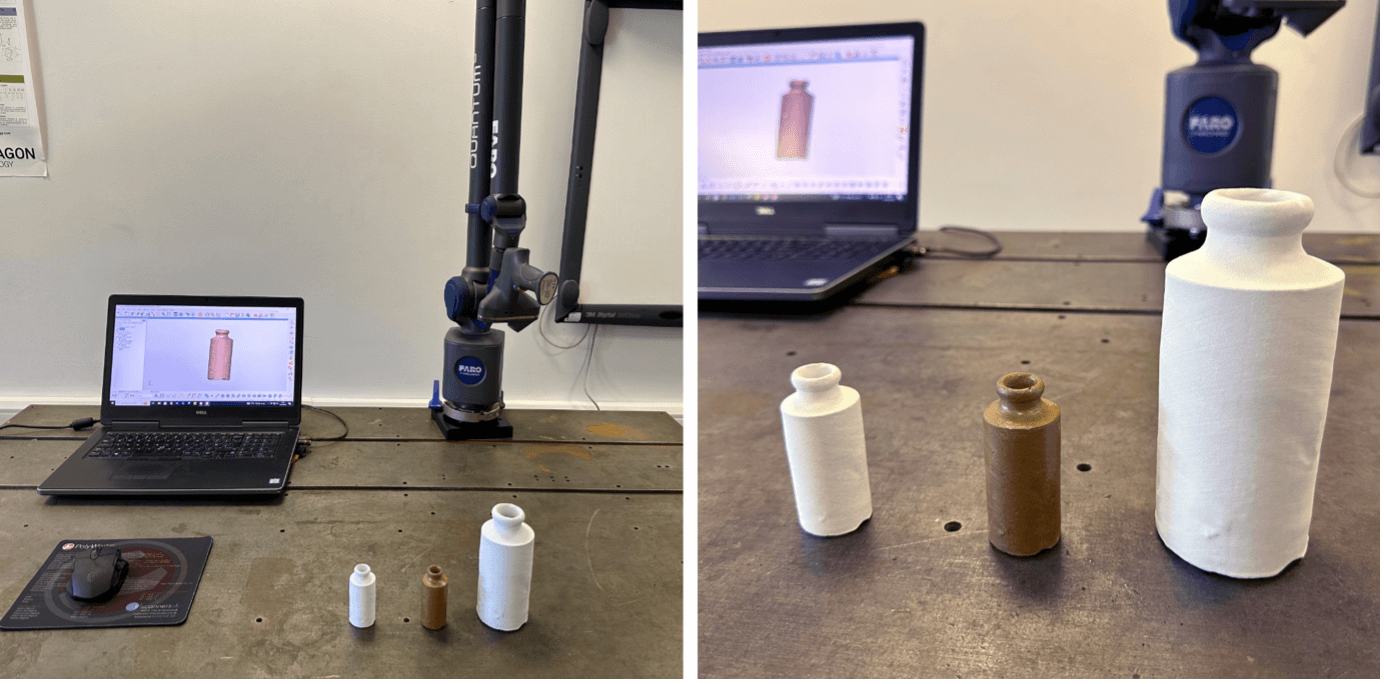
To achieve this goal, 3D Scanners UK employed a Faro arm, a testament to our commitment to utilising state-of-the-art technology for the preservation of heritage. The Faro arm was able to precisely capture the most intricate details of each artifact. Our skilled technicians worked hard to ensure that every contour and nuance of the artifacts was accurately recorded. This process was vital in creating a 3D point cloud representation of the artifacts, a digital blueprint that would serve as the foundation for the next phase.
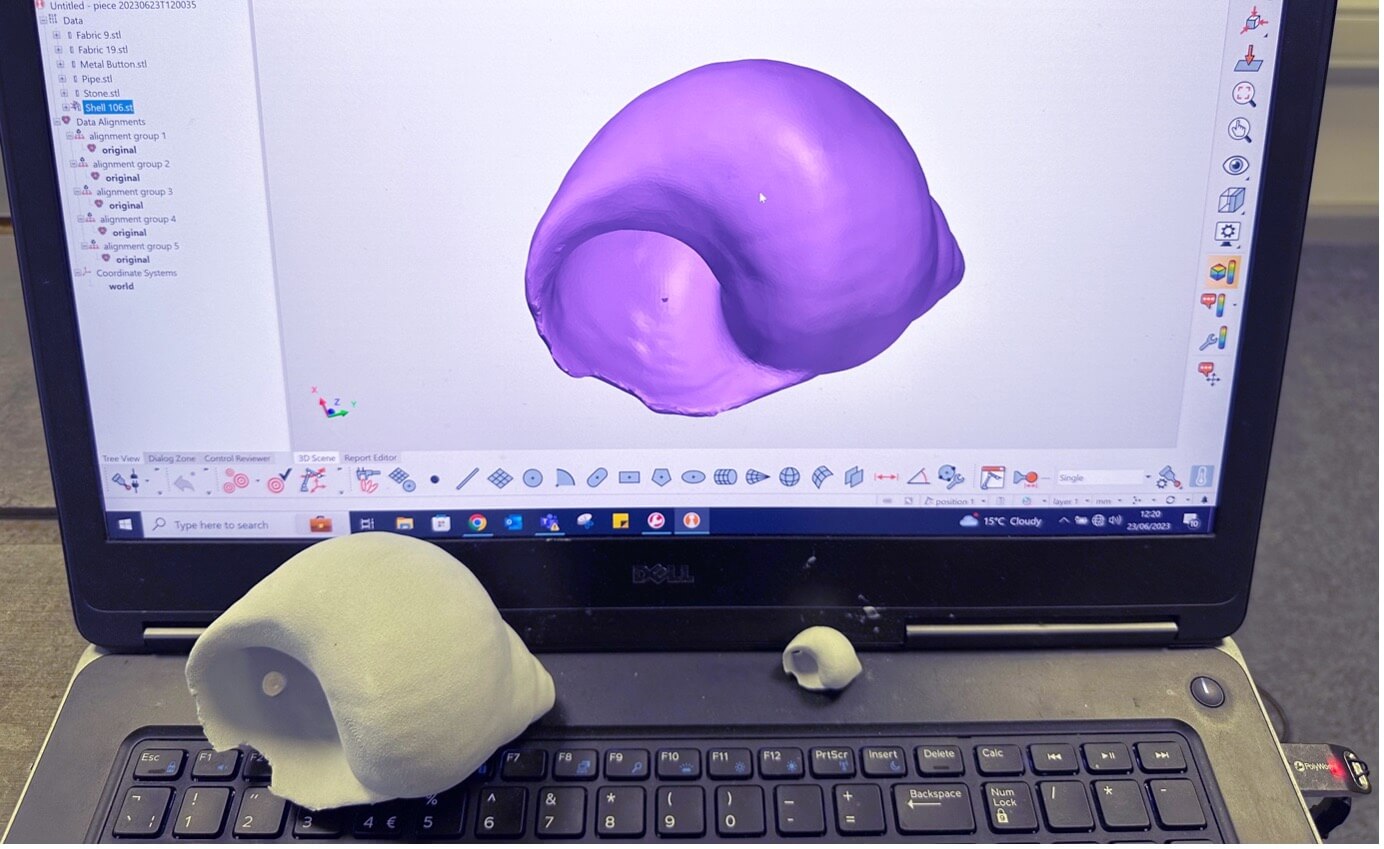
Using PolyWorks software, a detailed 3D point cloud representation of the artifacts was created on the screen. This point cloud underwent refinement before being transformed into an STL file. The next step was to import the STL file into the 3D printer, which then crafted the replicas of the original artifact. These captivating replicas were then readied for display alongside the authentic artifact at the forthcoming exhibition.
These replicated artifacts were a means of bridging the gap between history and the present. Visitors to the Blue Futures Exhibition were not only able to marvel at the intricate details of these artifacts but also interact with them, providing a unique opportunity for a tactile connection to our cultural heritage.