




Indexable Tools Challenge Solid Carbide for Small Diameters
SPONSORED CONTENT
Rotating one-piece solid carbide tools traditionally dominate the market for diameter ranges of up to 20 mm (.75”) and indexable tool manufacturers have not yet succeeded in penetrating this solid stronghold. Several important factors contribute to the historical perception of solid carbide as a better bet for tooling reliability.
NANMILL
Solid carbide tool accuracy compares favorably with that of indexable tools, particularly for small-diameter endmills and for tools with diameters beyond the range.
However, the role of reduced accuracy for tools of small diameter (for example, a milling cutter’s radial run-out) increases in significance as a factor affecting tool life.
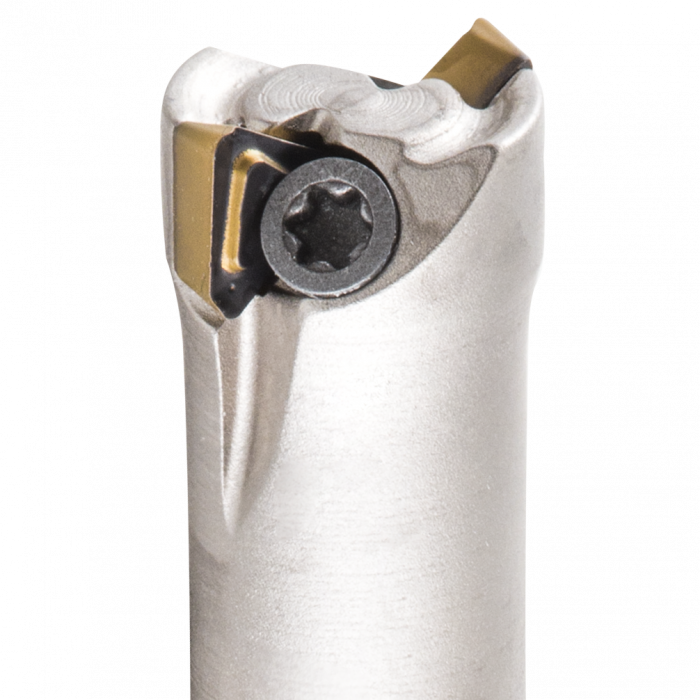
An indexable tool is made up of a tool body, replaceable inserts, and mechanical parts such as clamping screws or wedges, which secure the inserts in the body. Decreasing the tool diameter necessitates reducing dimensions of the assembly components. Reducing the size of the securing elements leads to weakening their strength and the tool becomes unable to withstand cutting loads under normal machining data. This seriously limits the tool application; further decreasing may cause degradation of the entire assembly structure.
The prices of small rotating tools are often high compared to the assembled concept, which adds to the perceived limitations of indexable tools in the small diameter range.
The Indexable Option
Indexable tools possess several distinct advantages that make applying these tools within the above range very attractive in the eyes of the customer. In many cases, especially in rough machining, changing a worn cutting edge by simple indexing provides economic benefits compared with having to replace a whole life-expired solid tool with a new tool. In addition, there is no need to use up time and resources on regrinding and recoating worn-out one-piece cutters.
Tool manufacturers have made significant progress in developing reliable designs that could be commercially viable against the solid carbide concept. Work in this direction has shown results already, and assembled mills and drills with interchangeable cutting heads are proving to be a realistic alternative to solid carbide tools.
Competitive performance
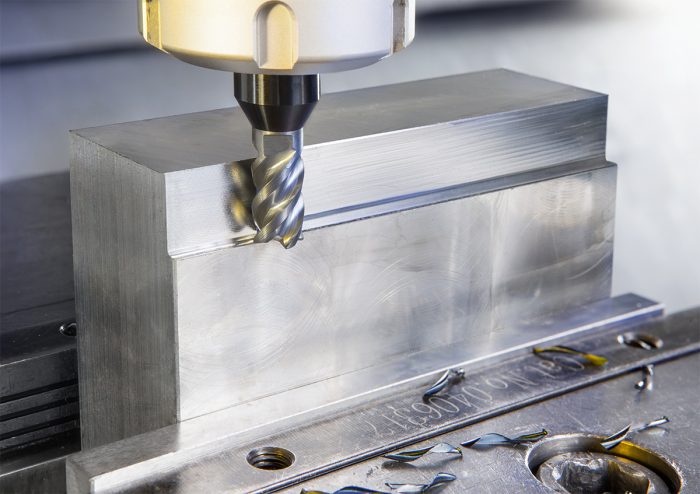
MULTI-MASTER Application
The introduction of tools with replaceable solid carbide cutting heads signifies a change in focus. ISCAR provides two examples of this concept with the ISCAR MULTIMASTER milling line and the CHAMDRILL line in drilling.
Performance and accuracy characteristics have positioned the new tools to be functionally competitive with solid carbide designs. The versatility of these lines, where a head can be mounted in different bodies and vice versa where a single body can carry different heads, facilitates various assembly combinations and contributes to reducing items in tool stock.
Another important design approach – “no set-up time” – characterizes these lines, as a worn-out head does not require spending time on set up and can be replaced while the tool is still clamped in the machine tool spindle. This cuts cycle time and, consequently, reduces production costs. In contrast, replacing a worn-out solid carbide mill or drill inevitably leads to a new set-up procedure.
In addition, the concept ensures sustainable use of cemented carbide with all the associated advantages.
The principle of “indexable” carbide tools has distinct merits and features strongly in tool design within the diameter range that is under discussion.
ISCAR has recently introduced a new range of small size indexable rotating tools under its LOGIQ range, featuring cutters with a nominal diameter of up to 20 mm (.75″). The new families of indexable milling cutters within the diameter range of 8-16 mm (.315-.625″) attract the most interest and possess several common features: the cutters carry triangular shape inserts with 3 cutting edges and the mechanical part that secures the inserts is represented by a screw.
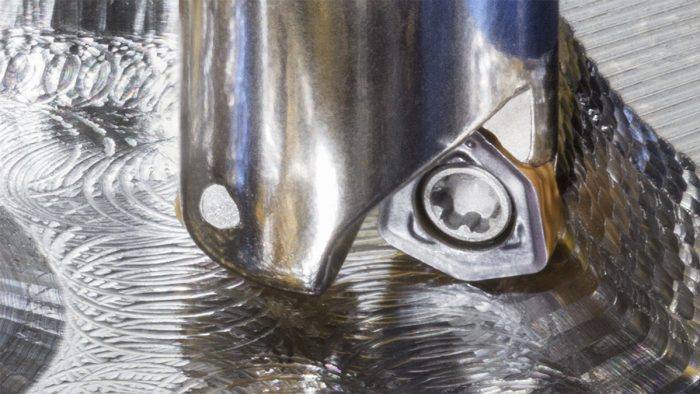
MICRO3FEED Application
These families are intended for milling square shoulder or fast feed (high feed) milling.
Small change, large impact
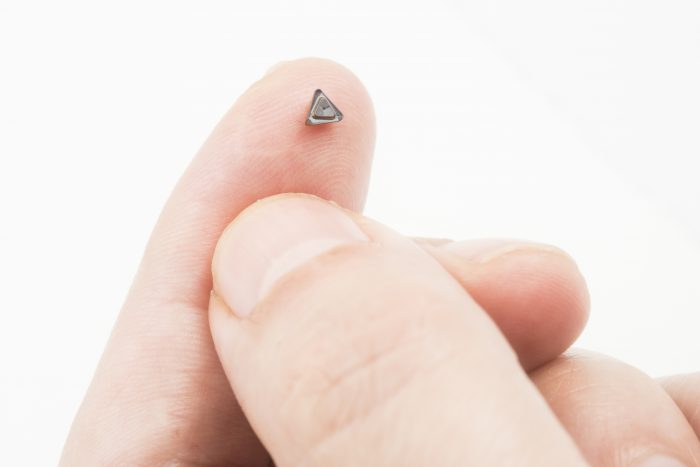 A 1 mm change in size: is this a lot or a little? For indexable tools in the small diameter range, it makes a noticeable difference.
Within the small diameter range, indexable tools can offer precision and performance advantages that position them competitively against the more traditional solid carbide tools. Indexable tools are beginning to shear their way into metalworking practices – and the industry is taking note.