





Top Rated Manual Micrometers
When it comes to precision measurements, no tool can serve the purpose better than the good, old micrometer.
Small, sleek and accurate, mics are considered one of the most important tools to have in a machinist’s toolbox and despite the proliferation of new, advanced equipment, they are often the first tool that inspectors reach for on the shop floor.
For this reason, when shopping for a new micrometer, you should always aim for the best model. It might cost you a little more, but you’ll be guaranteed to have an extremely accurate instrument that will last you a very long time.
From material to resolution, the variables to consider when selecting a micrometer are numerous and all equally important. We collected them all and made them easier to digest in our ultimate guide to micrometers that you can read here.
One of the main things to decide before getting started with your research is if your next micrometer will be digital or manual. Manual or mechanical micrometers are the most common type. They apply the working principle of the screw and nut to create an amazing magnification. Digital micrometers, on the other hand, apply electronic principles to take a measurement. There are pros and cons for each type. You can read more about digital micrometers here.
Our goal is to help you find the best manual micrometer for your preferences and project requirements. Beyond the selection of micrometer models to choose from, there are specifications that come down to machinist preference. For example the measurement size, whether it’s 0-1” or 0-6” which will be determined by the size of what you’re measuring or if you prefer a friction thimble versus a ratchet thimble which will just take experience and practice to determine what you prefer.
If you are considering a digital mic, check out our review of the Top 5 Digital Micrometers for Machinists or read our Ultimate Guide to Micrometers.
To learn which manual micrometers are the most popular among metalworkers in 2021, we asked the Practical Machinist community on our social media platforms to share their top picks. There were four particular models that completely dominated the conversation, one’s you’ll likely expect. Here’s what they were, in order from most to least popular.
Recommended Models
Starrett Outside Micrometer
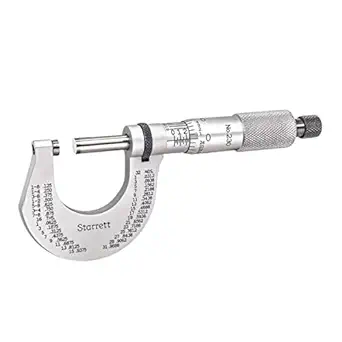
Starrett Outside Micrometer with One-Piece Spindle

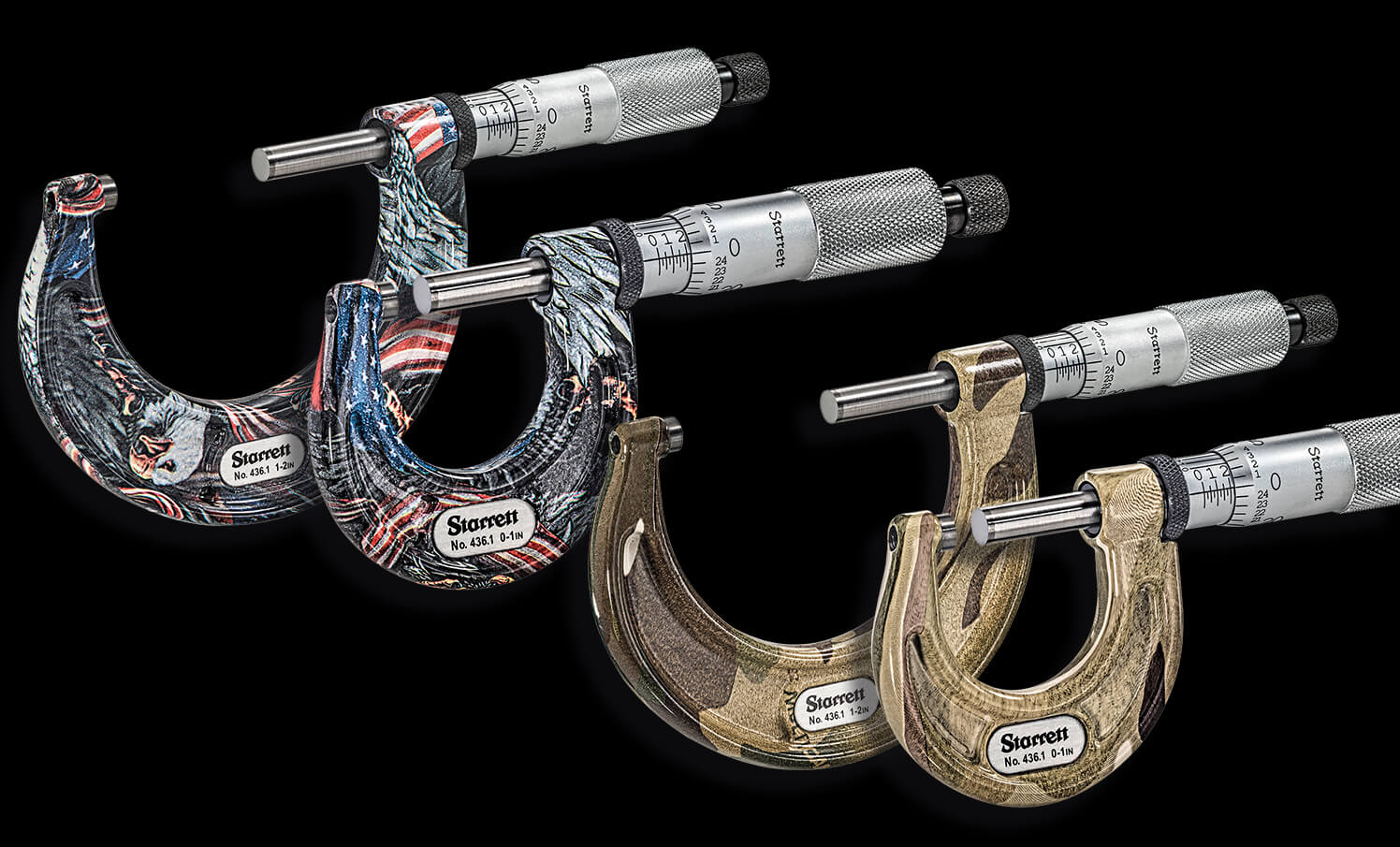
Each year Starrett and Mitutoyo are neck and neck. Claimed to be a bit heavier than its competitor Mitutoyo, in 2021 this model came in first place. The friction thimble enables repeatability and the high-grade tool steel construction enables durability. For many Practical Machinist members, satin chrome finish is a must as it supports optimal reading visibility, and this Starrett micrometer has it. It also has a locking ring mechanism, as opposed to a lever-type, for securing locking of the measurement position. If you prefer the lever-type locking mechanism, keep reading! For more reviews about Starrett micrometers, check out this Practical Machinist forum thread.
Mitutoyo Outside Micrometer
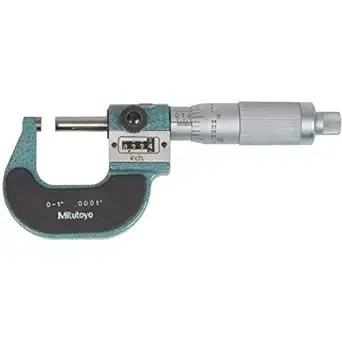
Mitutoyo 193-211 Digit Outside Micrometer
The Mitutoyo micrometer was the second most mentioned and recommended manual micrometer. Members of the Practical Machinist community raved about the lightweight quality of the tool. This tool has all the advanced features: a friction thimble, flat, carbide-tipped measuring faces for durability, and most importantly, that beloved chrome finish. It also features a lever-type mechanism to securely lock measurements.
Brown & Sharp Classicmaster Micrometer
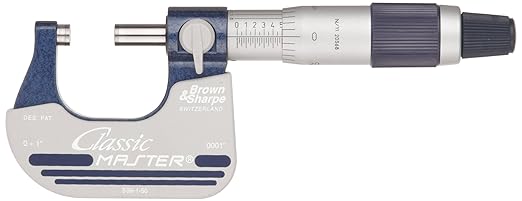
TESA Brown & Sharpe 599-1-50 Classicmaster Micrometer

This tool is known for its reliability and features carbide measuring faces for wear resistance and a friction thimble that supports quiet and one-handed operation. When you buy this tool, you also get a hex key, spanner wrench, and storage case. It wouldn’t be right to highlight the Brown and Sharp micrometer without featuring their Etalon model which was mentioned just as much, if not more than the Brown and Sharp brand itself.
Fowler Micrometer Set
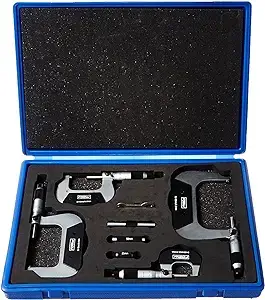
Fowler 72-229-220 Micrometer Set
If you are looking for a micrometer set, this is a great option. This set includes insulated frames to work against any expansion and contraction from heat and carbide measuring faces for durability. Casing included for convenient storage and protection. A great option if affordability is a priority.
INSIZE 3203-1A Outside Micrometer, 0-1″, Graduation .0001″
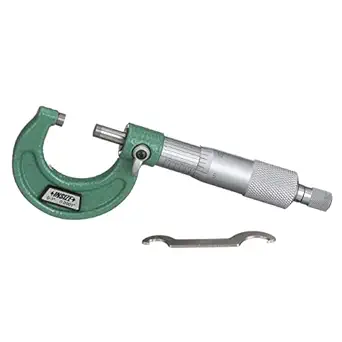
INSIZE 3203-1A Outside Micrometer, 0-1″, Graduation .0001″

Another affordable option that is not as quite popular as the models above , but mentioned enough times to make this list is the Insize micrometer. Low price does not equal low quality, those who use the tool even compare it to the top players. This mic is durable, heavy duty and water resistant.
Do you have experience with any of the manual micrometers mentioned above or a favorite model that didn’t make this list? Share with us in the comments.
This post may contain affiliate links. Please read our disclosure for more info.
22 Comments
Depends on how you are using the micrometer. If you are making a bushing to fit an I.D. and using the same micrometer the make the bushing that you used to measure the hole,only the accuracy of your feel comes into play. The micrometer could be off a ton and it wouldn’t matter for making that part.If you are making a part from a print then that may be a different story
Iam a little biased and less fashioned craftsman and would not trade in my mitutoyo manual micrometer for anything.(note :-I even state brand name)
I like my Mitutoyo also.
Starrett, Mitutoyo and Brown and Sharpe are my three go to mics. I have 50 years of machining R&D tool making back round. These 3 micrometers are the absolute best .
I have used Mitutoyo metric mics for over 40 years. I like their idea of giving the mic size on the thimble barrel. I calibrate myself.
Starrett is my go to mic. 25 yrs of conventional machining and the only one I’ve replaced , minus the carbide tips, is 2”-3”. Regardless of the job the mic should read correctly. Especially when tolerances are 4 place decimal.
YOUR ONLY AS GOOD AS YR TOOLS!
As has been stated above, some of the accuracy comes from the micrometer, and a portion from the tradesman’s hands. Selecting a brand of measuring tools, tends to come from the brand that is carried by the sales person that visits the shop on sales calls.
The first shop that I worked, was a B&S shop. Nearly all of the shops that I worked in later, leaned toward Starrett tools. The Mitutoyo dial calipers had a better system to keep the rack clear of chips than the Starrett Mdl. 130. In these times, the digital calipers are a winner.
In my years of building dies and molds, I would recommend carbide measuring faces on any brand of micrometer. Another point that I feel is important with today’s shrinking tolerances, is to standardize all of the shop tools with in house gauging and inspection or having someone on the outside come in to assure that all of the inches or millimeters are the same size.
I like the Starrett slant line. I have had one since the ’60’s.
Can’t beat a 6″ vernier caliper either. No dial needle to jump, no battery to go dead, immune to coolant.
Starrett didn’t have slant lines Browne and Sharpe did!
You should always use you micrometer as a comparing tool, (ie measure a known (calibrated) gage then compare to your part) and still buy the best mic you can afford.
I have used the Brown & Sharp for over 40 years it was my first Mic my dad gave to me when I was 10 , yes we had a lathe in the house and I learned to run it at 10 years old. It has always been my go to for the 0-1, Mitutoyo makes some nice stuff but for my 0-1 which is my primary Mic I will always go with the Brown & Sharp personal preference I guess.
I have used all types of Micrometers over the years even off brands made in Poland that work very well. I do like the Mitutoyo. The biggest thing I see is the need for proper care of your tools. As well finding a GOOD Calibration Company is important. There are many that say they can do it but it is my experience that many of them do not know what they are doing. Of course you can always do it yourself unless company policy states otherwise.
I too like the quality of Polish tools. I have an outstanding vernier height gauge of Polish origins
It’s hard to say which of the big three is best, B&S, Starrett or Mitutoyo. Each have their attributes. I have all 3 plus others LOL.
I suggest you try them before buying to see how they each feel measuring a Jo block. From the tool guy if you have one, not the guy on the
next bench over.
I have two 0-1 Starrett mics . The only problem is, one of them will go on vacation and never return. I’ve searched the the shop for weeks looking for my 0-1s . After a few months I purchased another pair. Two years later I grabbed the MSC catalog of the shelf and SOB there they were , right where I left them as a bookmark!
I have a set of Starrett 0-10″ with carbide faces and read in tenths and a set of older Etalon Pierre Roche 0-8″ with carbide faces and read in tenths as well. I personally like the Etalons and find my Starretts collecting dust. They are easier to use with one hand especially the larger sizes. The smooth friction thimble feels better as well
Listen, it doesn’t matter how much you pat for a manual micrometer. The accuracy and repeatability are just the same if a few criteria are met. The thread must be as smooth as possible. I think any manufacturer can accomplish this. The mechanism for taking up slack must be effective. Easily done. The measuring faces must be flat and parallel. No-brainer.
I have several hand mikes and I regularly test them against one another. Seldom are the readings in agreement. The reason? The friction thimbles or ratchet stops are not exactly the same. This is where hand-feel and experience come in. Take your fingers away from the ratchet or friction sleeve, and get used to turning the final few thou with your fingers on the thimble. That’s the only way to get consistent readings. Also, avoid holding the tool in your hand too long, or the frame may expand with the heat of your skin, and start to measure over-size.
The Mitutoyo QuantuMike is in a completely different league of it’s own. It’s like comparing manual milling to CNC. It has a 4:1 spindle ratio, and you really need to check one out before you invest in another micrometer. My old mikes haven’t left the drawer since I invested in these.
Micrometers with carbide measuring faces are better. Starrett and Mitutoyo are in my tool box. Be sure to check your mikes often at several places with Jo blocks. You can also check the parallelism of the measuring faces by measuring a ball bearing at several places on the measuring faces. I don’t like friction thimbles because they are not consistent, and would rather rely on my feel when measuring. You can clean the measuring faces by sliding a clean piece of paper between them.
I spent nearly 30 years in a metrology calibration laboratory, and worked as a machinist & tool maker before that. Now retired.
Fowler?…I don’t think so. No mention of Etalon. Swiss and the best quality.
Etalon first, Mitutoyo second. I’ve worked with most of the brands, form the cheapos to the Etalons, I’ve been at it now for more than 40 years. I have Etalon from 0-12″, Mitutoyo electronics for my 0-1″ as a spare for the Etalon when I am using more than one mic. I have discovered that many of the less expensive brands seem to repeat well enough BUT they always seem to be off the numbers (plus/minus even .002″ or .003″) when compared to the standards used for calibration.
I have a whole Fleet of Mauser Mics…..nothing better to get.